
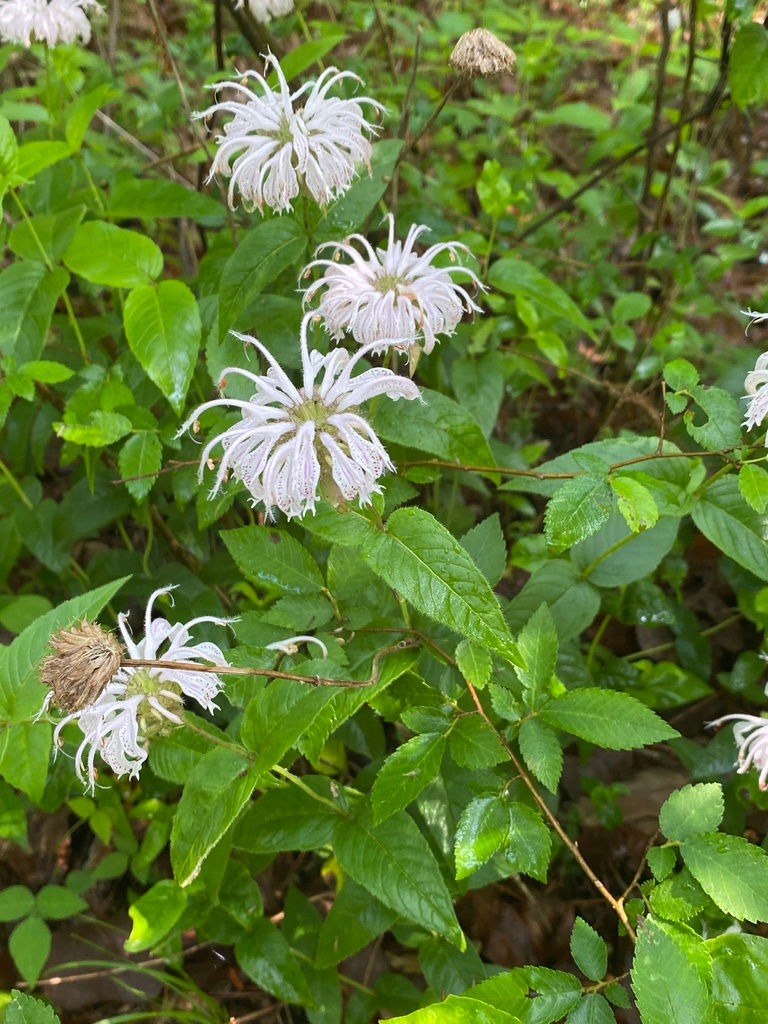
Ever long for bee balm blooms in April? Bradbury's bee balm displays showy lavender-pink flowers in April and May. The pungent-smelling leaves emerge dark purple. Bradbury's bee balm thrives in full or part sun and medium to dry, well-drained soils that range from silty to rocky. Full sun produces taller plants and and more flowers. Lower leaves drop from the plant during drought. Companion perennials with overlapping bloom times include columbine, hairy beardtongue, prairie smoke, golden alexander, and Tennessee coneflower.
Plant Characteristics:
Grows 1-2' tall and 2-3' wide.
Grows in full or part sun with better form and flowering in full sun.
Prefers medium to dry, well-drained soils, including silty, loamy, sandy, and rocky.
Wildlife Value:
Host plant for larvae of 11 species of Lepidoptera (five are specialists), including hermit sphinx and the raspberry pyrausta. Bee balm supports the following specialized bees: Dufourea monardae (a species of sweat bee), Perdita gerhardi, and Protandrena abdominalis (a species of mining bee). Deer and rabbits avoid the rough, pungent leaves. The nectar and pollen attract butterflies; hummingbirds; moths; wasps; and bees, including honey, bumble, miner, and plasterer bees.
Medicinal, Edible, and Other Uses:
Native Americans made a strong “sweating” tea to treat colds. Bee balm contains thymol, an external antiseptic. Internally, it was used to destroy worms and parasites and to treat upset stomachs, diarrhea, and kidney disease.
Flowers and leaves can be brewed into a weak, pleasant-tasting tea. They may also be used to flavor salads or hot dishes.
Resources:
Grow It Build It
https://growitbuildit.com/monarda-bradburiana-bradburys-beebalm/
North Carolina Extension
https://plants.ces.ncsu.edu/plants/monarda-bradburyana/
Full profile soon!
